Why the buying price is not the exchange quote
When you look up the gold price online, you are seeing the spot price — a wholesale quote for pure metal in delivery quantities, normally as certified bars. Your ring is not a certified bar. It is an alloy of unknown composition that has to be measured, bought, pooled with other pieces and sent to a refinery to be melted down. The buying price therefore sits below spot, and the gap between them is the buying margin.
What the margin pays for
The margin is not pure profit. It covers the costs that arise between your ring and a finished bar:
- Refining — melting down and separating out the alloying metals is a paid service, charged on every batch processed.
- Testing and risk — a non-contact tester reads the surface. Pieces suspected of being rolled gold or an unusual alloy get a more thorough check, because a mistake lands on the buyer.
- Price risk over time — time passes between purchase and delivery to the refinery, and the rate can move either way in the meantime.
- Running costs — calibrated scales, insurance, record-keeping, the shop itself.
A fair buyer will acknowledge the margin rather than pretend to pay spot. Anyone claiming to pay 100% of the exchange price usually takes the difference elsewhere — by understating purity or rounding the weight down.
Step by step at the counter
- Inspection and sorting. Pieces are separated by purity — 585 with 585, 750 with 750. Putting everything in one pile would mean valuing the lot at the lowest purity present.
- Purity testing. Each group is checked with the tester. Plated pieces show up immediately and you are told there and then, not after the weighing.
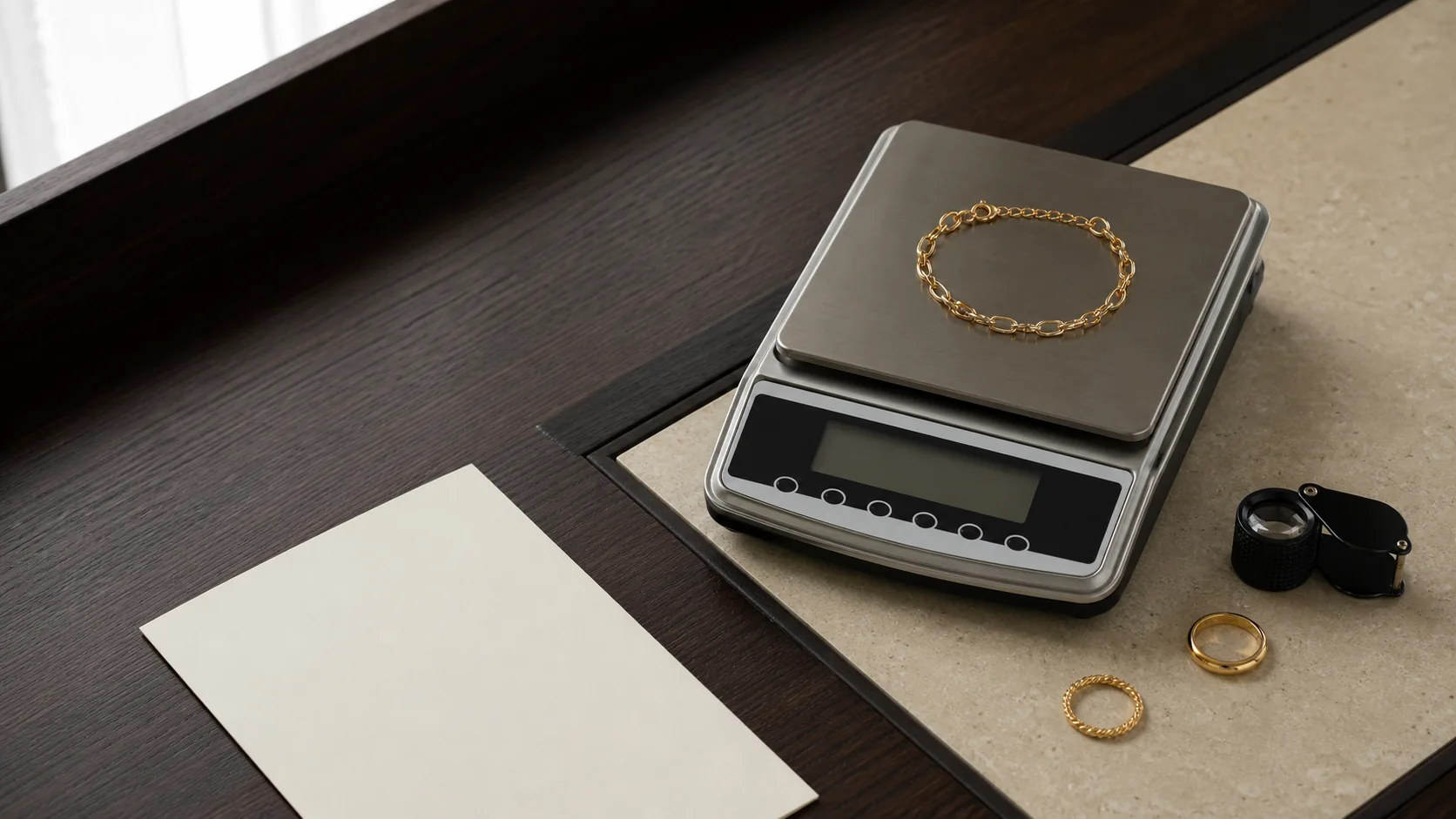
- Weighing. On a calibrated scale, display turned towards you. Stones and non-metal parts are deducted.
- Calculation and offer. The amount is itemised by group rather than given as a single lump figure.
- Proof of identity. Precious metal buying is subject to record-keeping obligations, so we need an ID card or passport. Without one the purchase cannot go ahead.
- Payment and receipt. You get the money immediately in cash, along with a receipt stating weight, measured purity and price per gram.
When we offer more than metal value
With scrap gold, metal value is the ceiling. Some pieces, though, carry a second value that exceeds it:
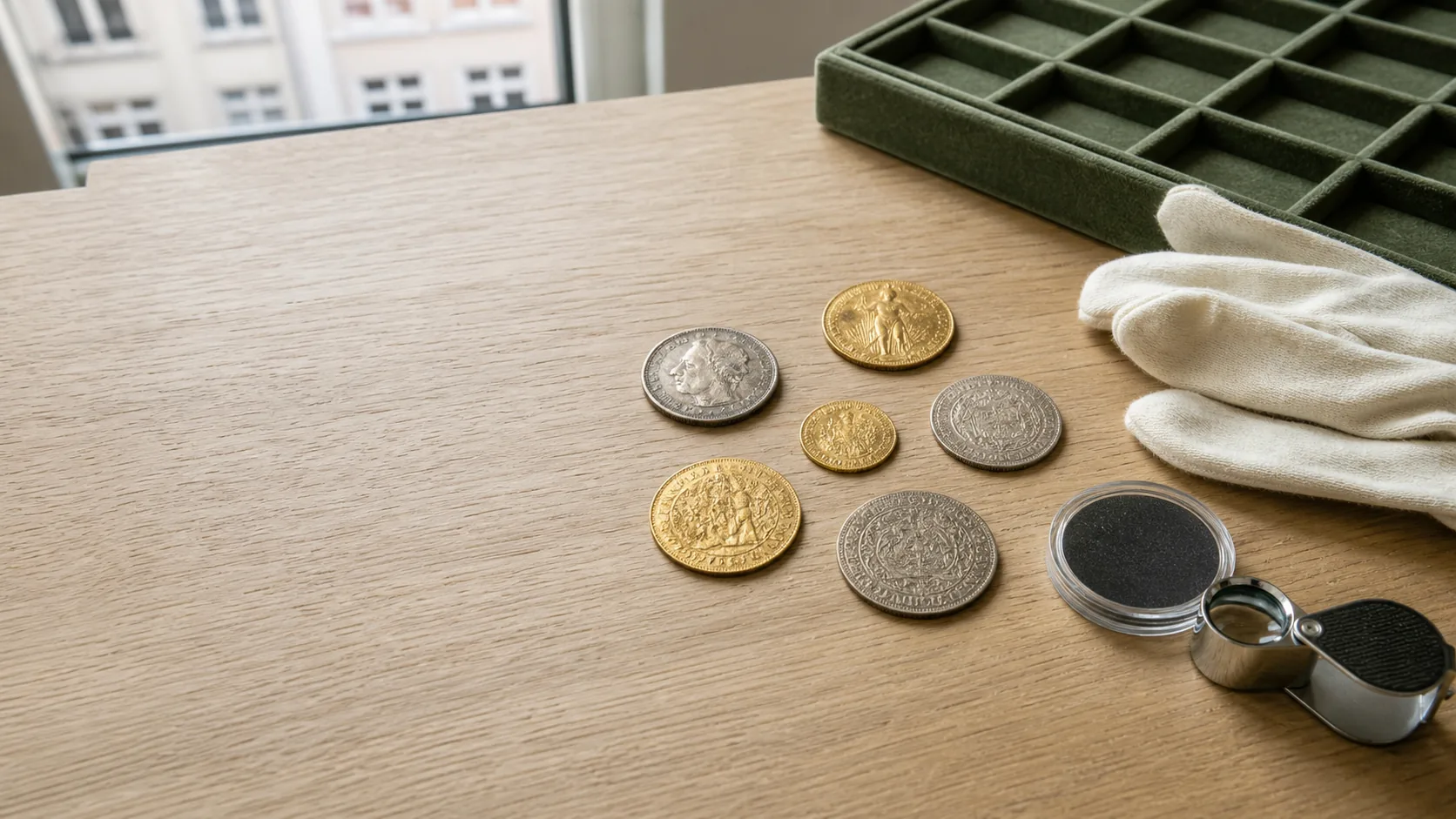
- Numismatics — with collectable coins it is the year, condition and mintage that decide, not the weight. A ducat in good condition can be worth several times its metal.
- Antique and signed jewellery — on a signed piece or a well-preserved item from the First Republic era, craftsmanship and provenance count too.
- Set stones — diamonds and genuine Czech garnets are valued separately alongside the metal.
Which is why we always say: do not dismantle jewellery before bringing it in. A prised-out stone and a bent setting reduce the value even though the gold weight is unchanged.
What pushes the price down
The most common reason an offer comes in below expectations is plating — the piece looks gold but the core is brass or silver. The second is solder: repaired chains and resized rings contain joints of lower-purity metal that pull the average down. The third is hollow construction — wide bangles with an internal filler weigh far less than they appear to. None of this stops us buying a piece; it is just worth knowing in advance.
What you can check yourself
Before you come in, weigh the pieces on a kitchen scale and read the hallmarks. With those two figures and the buying price list you can work out an estimate and tell whether an offer falls in the expected range. How the per-gram price for your purity is derived from the ounce price is covered in Gold buying in Brno: price per gram.
Want a specific number for your piece? Come to Kotlářská 28, Brno-střed, or send us a photo first — the valuation is free, non-binding, and you can walk away at any point.