How and where to sell a complete coin collection safely
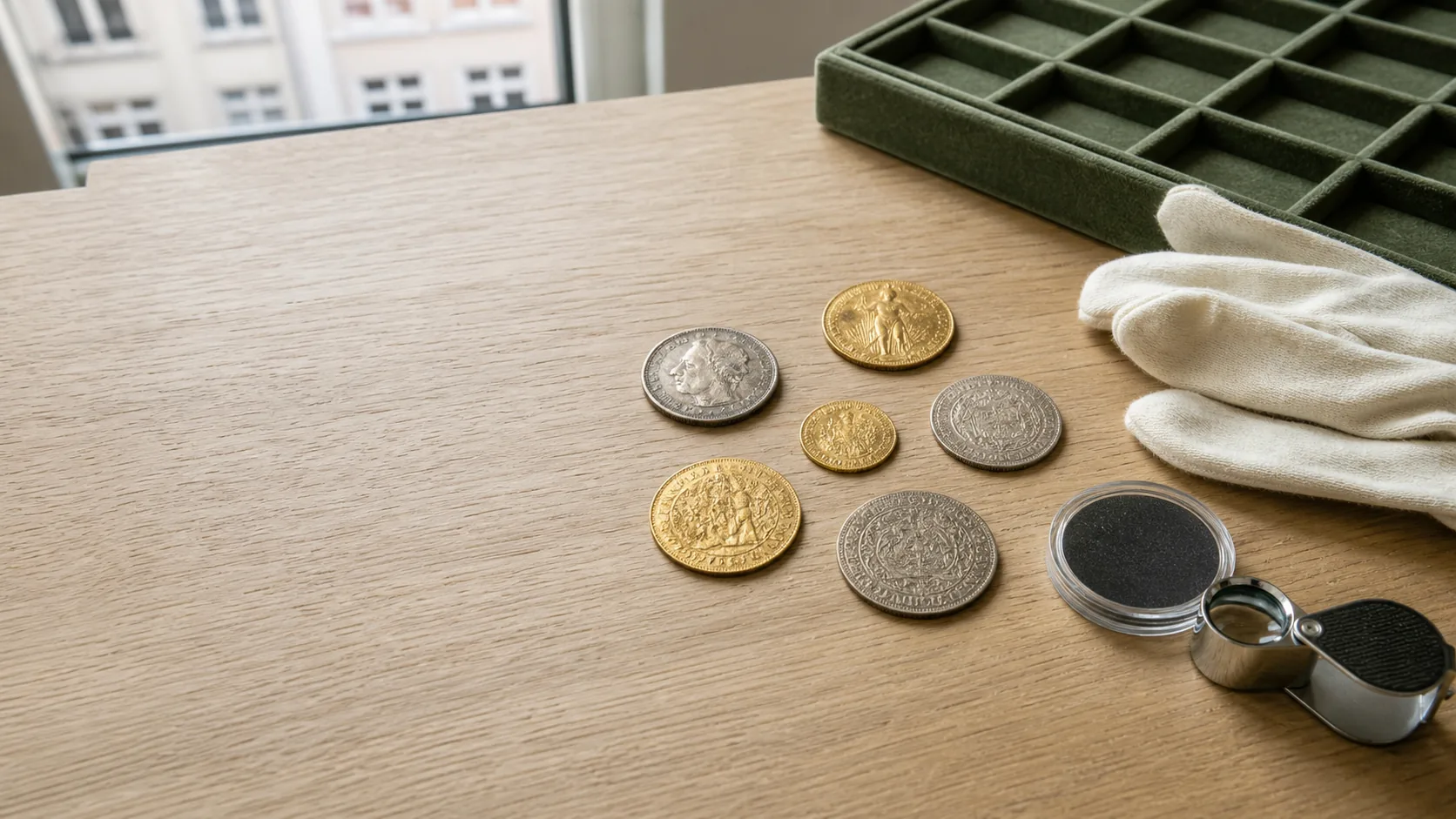
Before selling an inherited or long-built coin collection, do not clean or split it. Learn how to prepare the collection, have it assessed and obtain a transparent offer.
Read articlePractical articles about precious metal prices, jewellery purity, valuation and safe selling in Brno.

Before selling an inherited or long-built coin collection, do not clean or split it. Learn how to prepare the collection, have it assessed and obtain a transparent offer.
Read article
One piece carries three different values, and all are correct. What you actually need for selling, insuring, probate and dividing assets.

Where the gap between purchase and buying price went, why every stone now starts with natural-or-lab-grown, and which of the 4Cs carries the most weight.

Pearls are organic and they age. Safe home tests instead of the tooth test, what dry storage does to nacre, and why the clasp often outvalues the strand.

On coloured stones, treatment moves price further than carats. Heating, oiling, diffusion — and how to tell real moldavite from pressed glass.

Jewellery can be dated without a hallmark — by the clasp, the stone cut and the setting. Concrete period markers, and what pulls value down.

The price per gram comes from converting the troy ounce through the dollar rate and purity. The full calculation, worked through on an example.

Two identical coins can differ tenfold — condition decides. The 0–4 scale, why coins are never cleaned, and what to look for on one.

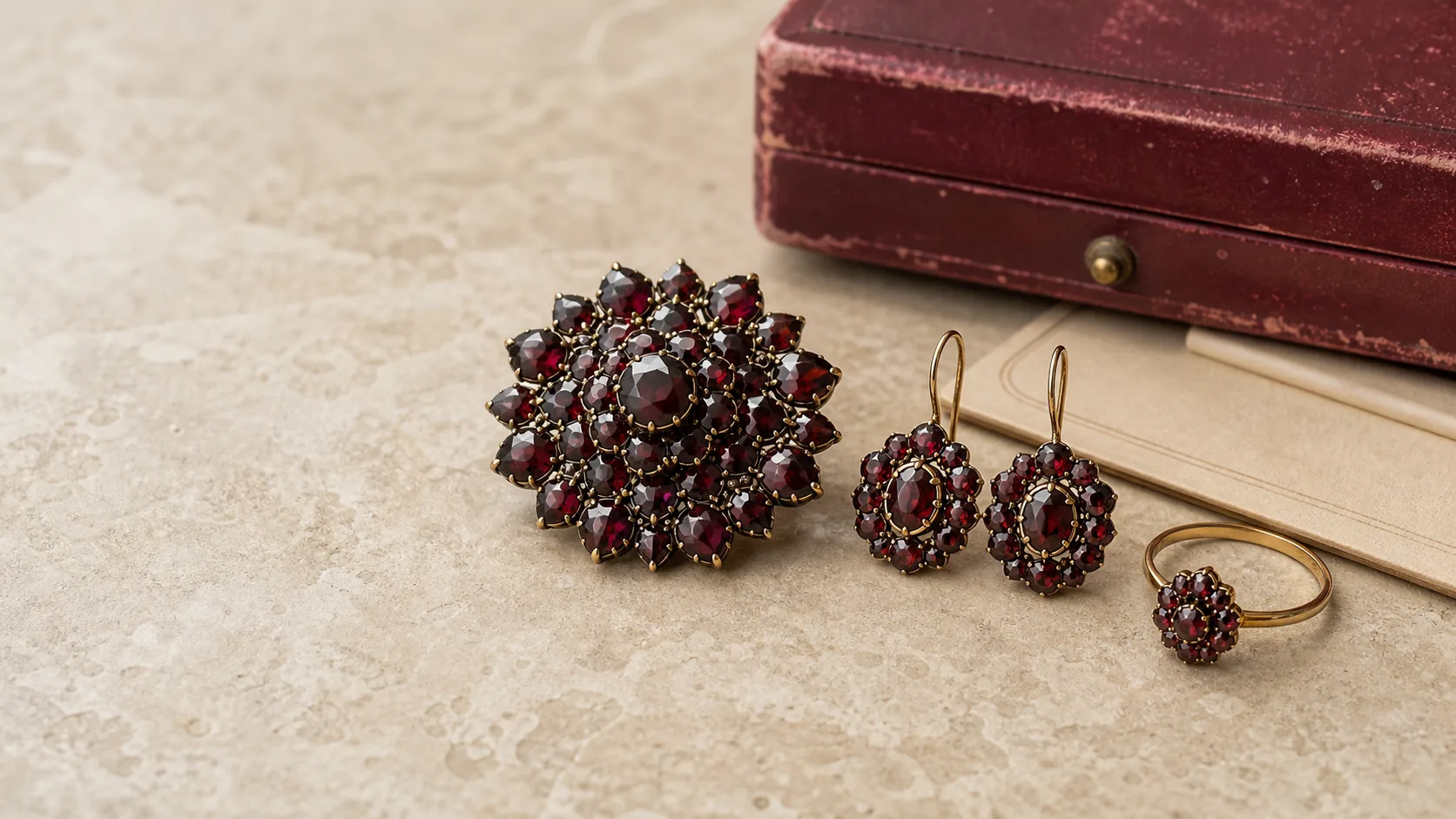
The Czech garnet is pyrope — and stone size gives it away more reliably than colour. How it differs from almandine and glass, and why you never dismantle it.

A crown carries no hallmark and is not meant to — purity has to be measured. What else is in the alloy, and why the ceramic stays put.

White gold is not actually white — rhodium plating makes it so. Why pieces yellow, nickel versus palladium alloys, and why the price is unchanged.

Plating, rolled gold, vermeil and tombac — four materials mistaken for gold. How each gives itself away, and what a green finger really means.

Bullion premium versus numismatic — two different worlds. St Wenceslas ducats, spotting fakes, and why a Krugerrand holds no less gold.

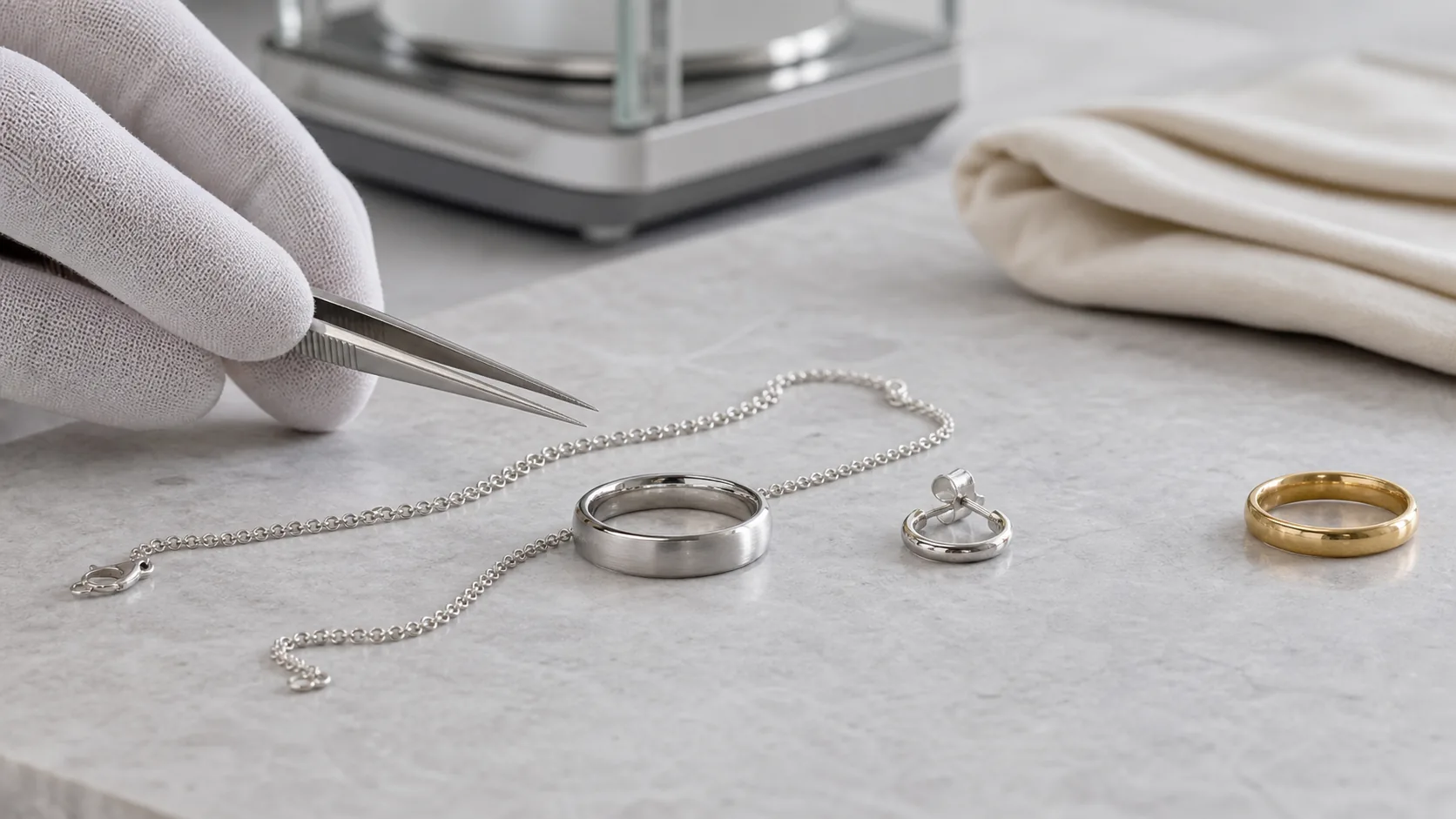
Why the buying price sits below the exchange quote, what the margin covers, and how a purchase runs step by step at the counter.

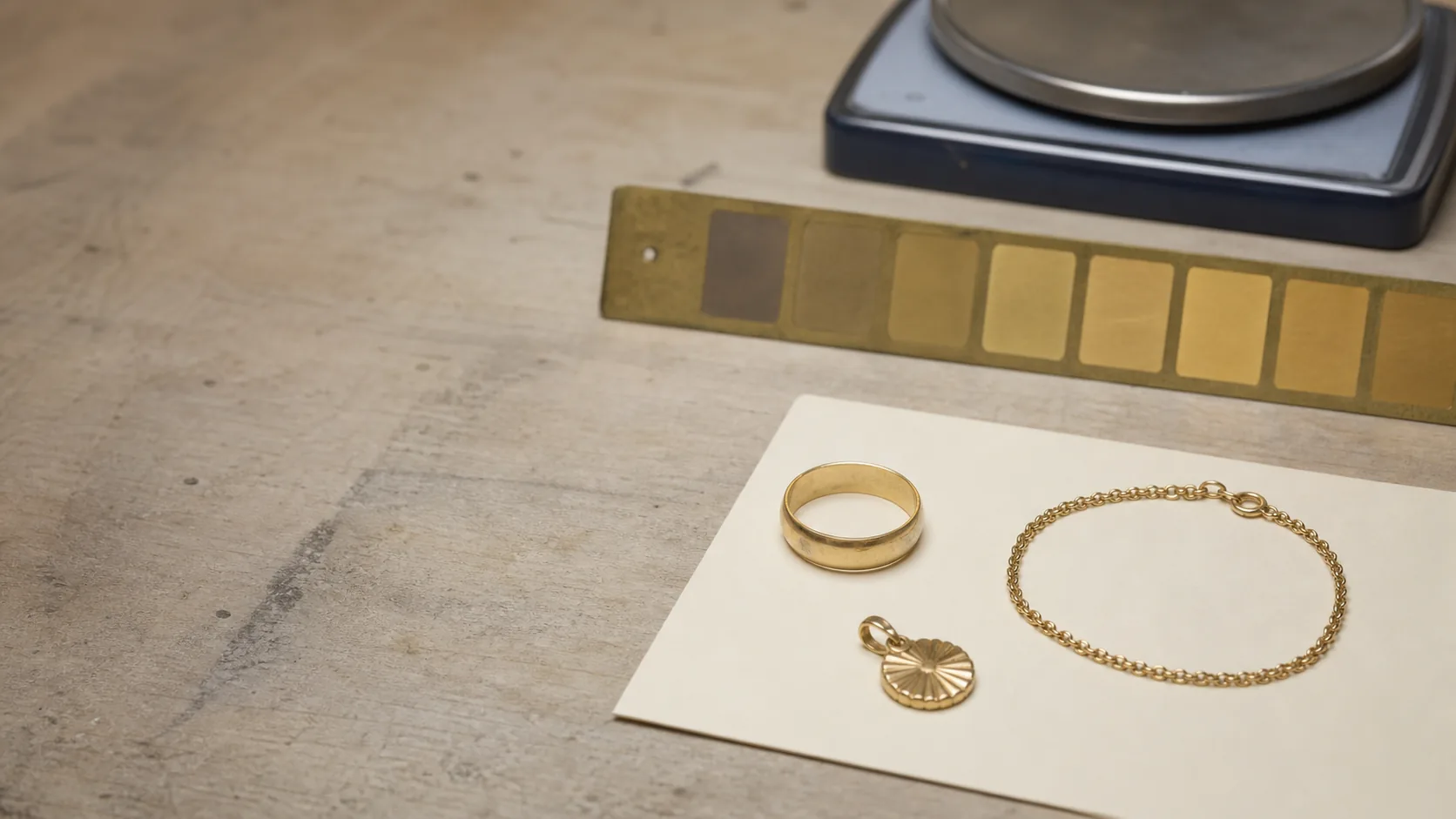
Where to find the stamp on a piece, how much pure gold a five-gram ring holds, and why nobody pays for the full weight.

Five mistakes people make trying to raise the value that lower it instead. What to bring, when to come, and why to keep the „worthless" pieces.

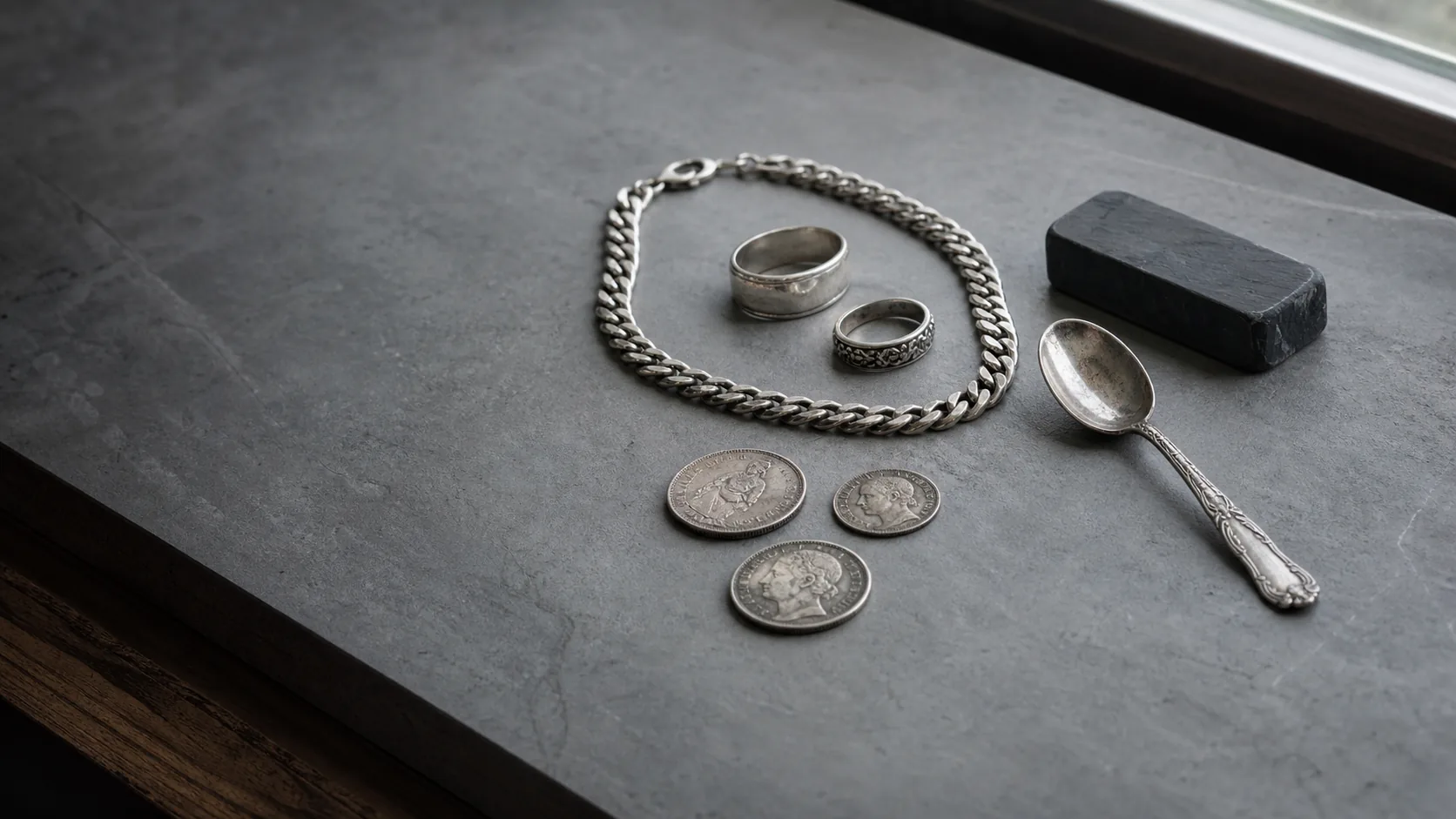
Solid or plated? The price gap is an order of magnitude. How the marks tell you — on jewellery, coins and cutlery — and why you never clean silver first.

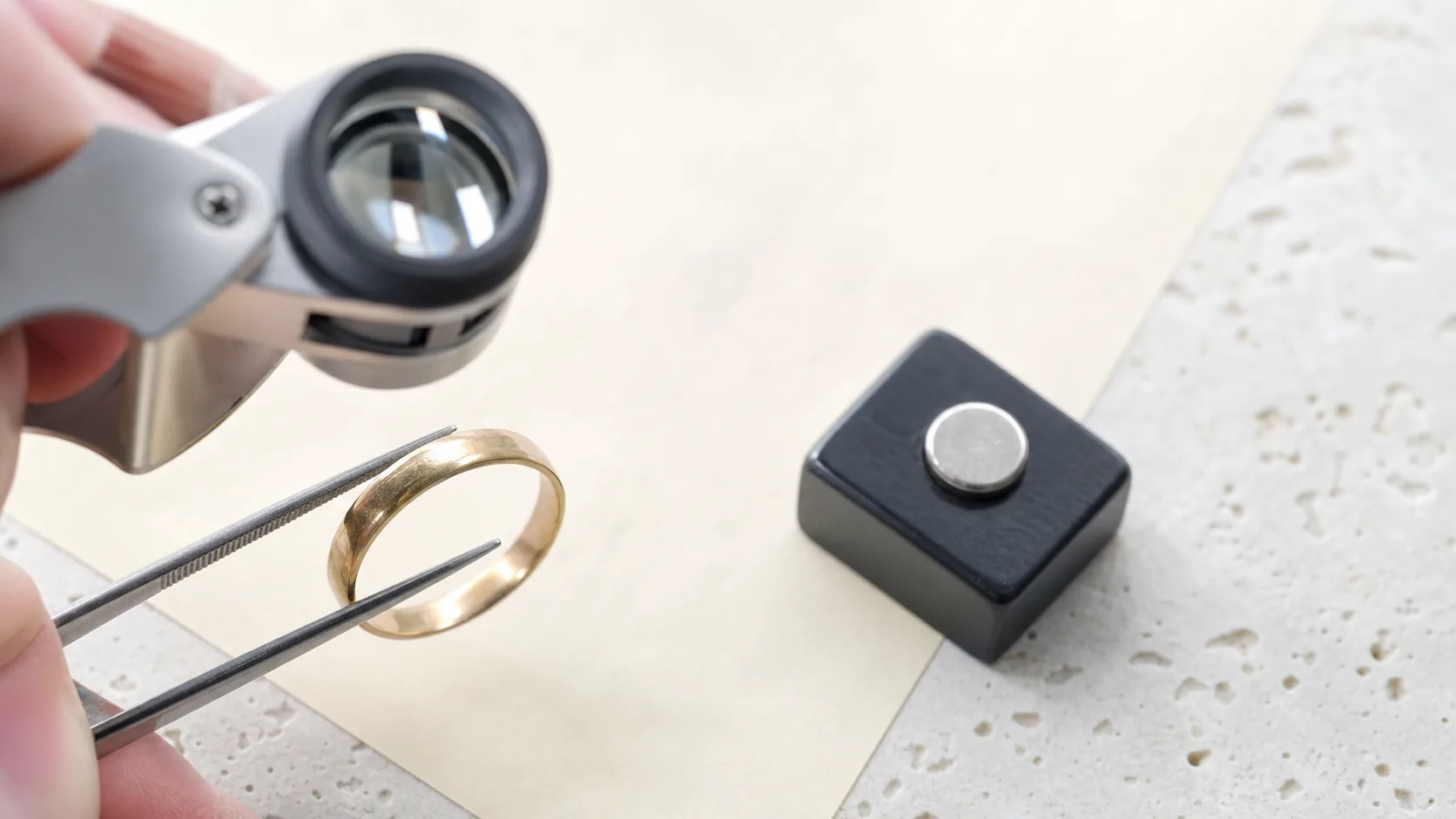
A home check can rule gold out but never rule it in. Where plating shows, what a hallmark really proves, and the limits of the magnet test.

A ring is an assembly, and each part can be a different alloy. Checking it part by part, where fakes come from, and what helps after you have bought one.

A higher rate per gram can mean a lower final figure. A worked example shows where the gap opens up and which four numbers to have itemised.

The whole visit from counter to itemised offer — four stages of assessment, what to bring, when it takes longer, and what happens if you decline.
Send us a non-binding request and we will get back to you with the next steps.