You can date a piece without a hallmark
A hallmark is the quickest route but far from the only one. Goldsmithing techniques, fashion and available tools changed over time and left traces on a piece that cannot be faked retrospectively. This is why, on antique pieces, the construction is assessed before the metal — it shows whether the piece is what it claims to be.
A brooch clasp reveals the decade
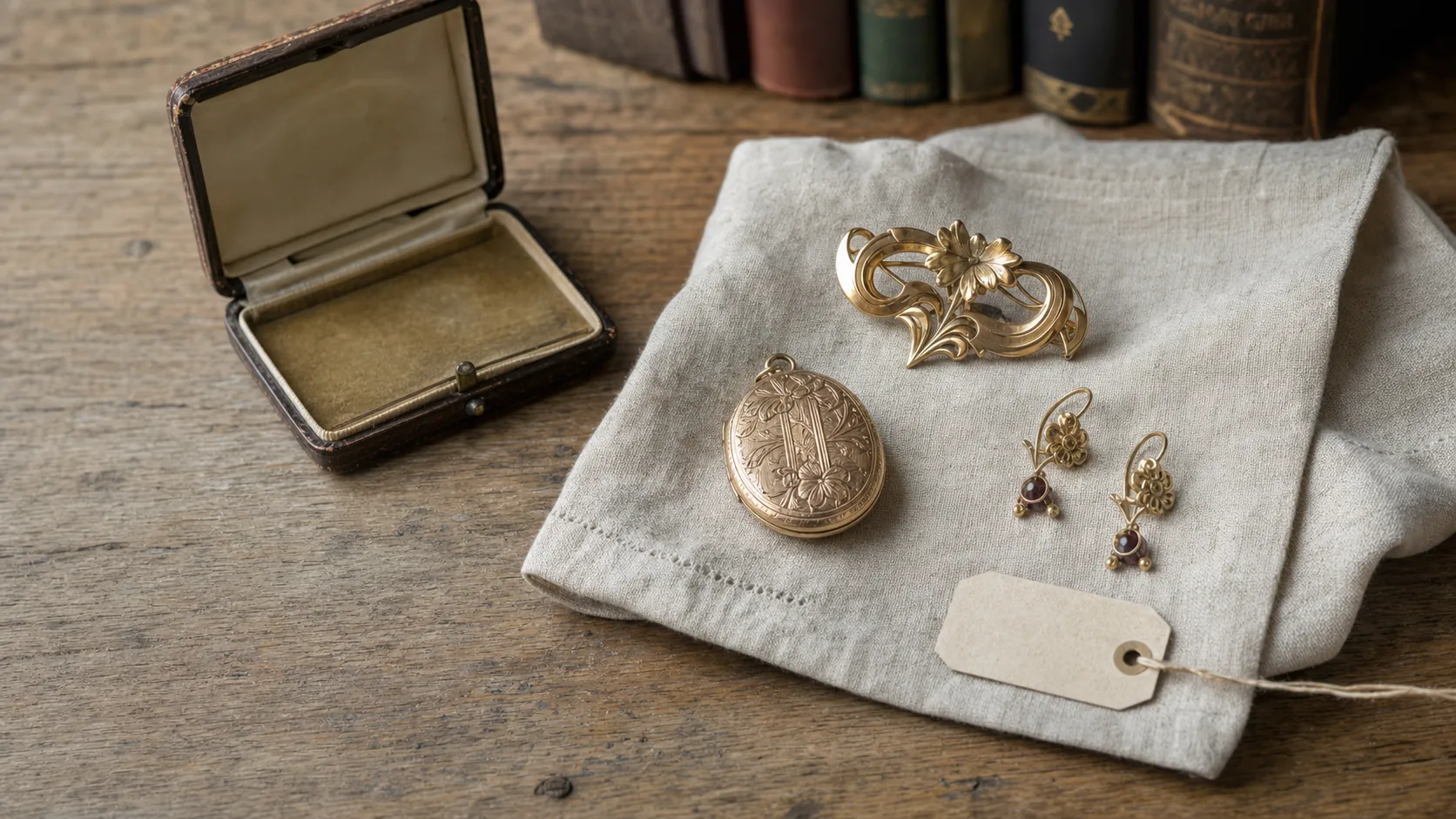
On brooches, the pin fastening is the most talkative detail:
- A simple C-shaped hook with no safety catch points to the nineteenth century and earlier.
- The rollover safety catch, familiar from every modern brooch, spread from roughly the 1910s and 1920s.
- A pin extending beyond the body of the brooch is another sign of earlier work — it had to grip the thicker fabric of the period.
Earrings by their fittings
Earrings date equally well. Screw backs predominated from around the turn of the century to the mid-twentieth, clips appeared in the 1930s, and posts for pierced ears only became widespread again from the 1960s. Screw-back earrings in an Art Deco style therefore make sense; posts on a piece sold as Art Nouveau are cause for caution — or indicate a later conversion.
Stone cut is the most precise clue
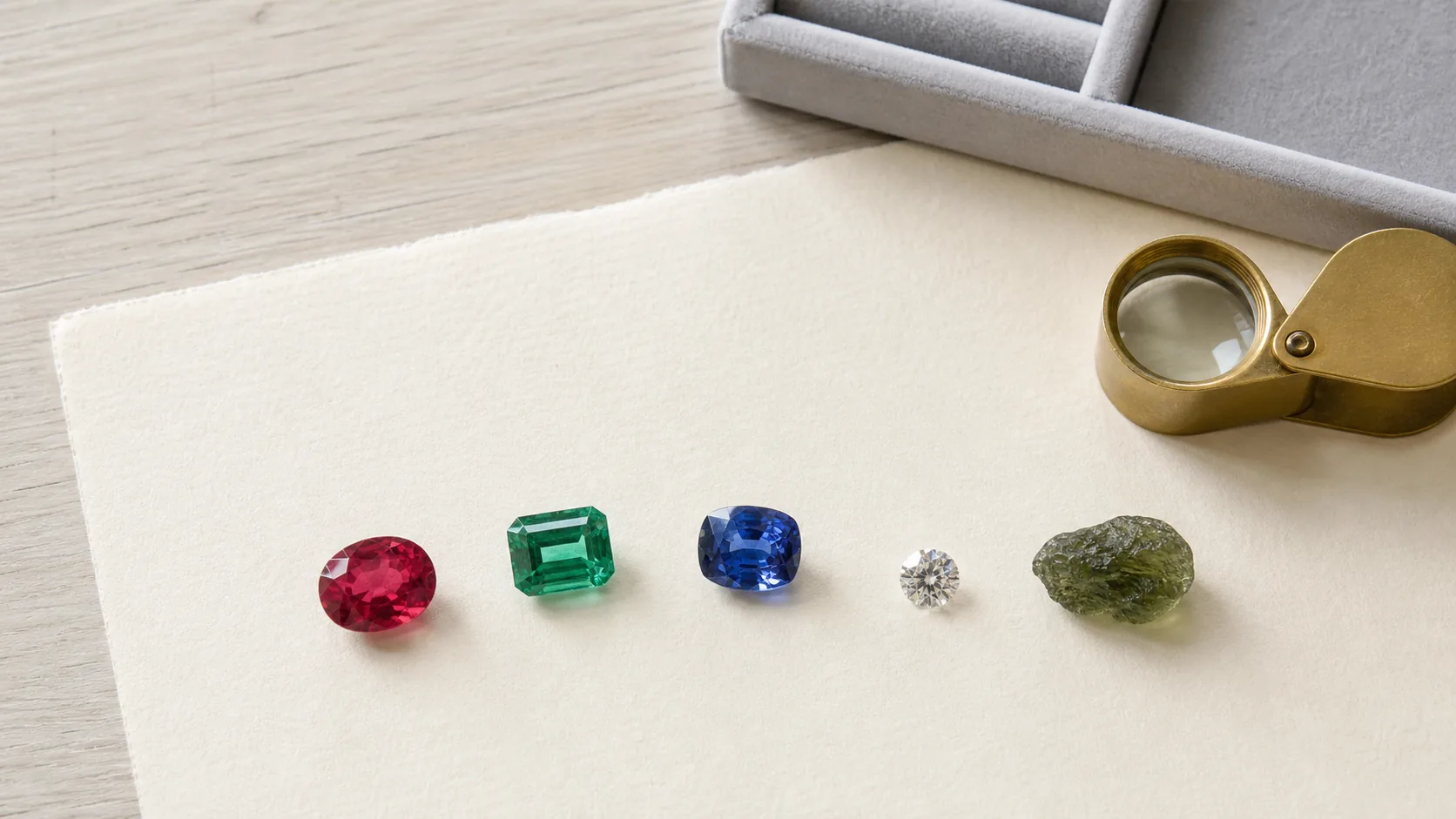
Diamonds were always cut to the possibilities of their day, and a cut cannot be aged artificially:
- Rose cut (flat base, facets only on top) — seventeenth to nineteenth century.
- Old mine cut — irregular, with a large culet and high crown, through to the end of the nineteenth century.
- Old European cut — rounder, but still with a sizeable culet, roughly 1890–1930.
- Modern round brilliant — from the 1920s, standard after the war.
An old cut is not a defect. Collectors often value it in its own right, because such a stone behaves quite differently in warm light from a modern brilliant. Recutting an old stone to modern proportions is therefore almost always a mistake — weight is lost and period authenticity disappears with it.
Settings and surface
Older stones were often held in closed-back settings, sometimes over a reflective foil that supplied fire in the age of candlelight. Open settings that let light through from beneath came later. Under a loupe you can also see hand work — slight irregularities in the setting edges, graver marks, and marginally uneven spacing between stones. Perfect regularity indicates machine production.
Hallmark, signature and provenance
A hallmark states the metal, the purity and sometimes the period; an overview is on the Czech hallmarks page. A workshop signature or a known maker's mark can raise value substantially. And what is not on the piece helps too: the original case, a receipt, photographs of someone wearing it. With antiques, surviving provenance is real value rather than mere sentiment.
What pulls value down
- Unskilled soldering and soft-solder repairs, immediately visible under a loupe.
- Replaced stones, particularly a modern cut in a period setting.
- Conversions — a brooch turned into a pendant, a parure broken into singles.
- Polished-away patina. On silver and old gold the natural surface is part of the value and a polishing wheel removes it for good.
When value exceeds the metal price
What rises above the gold or silver price is chiefly pieces that are well made, original, signed or sought after by collectors — Art Nouveau, Art Deco, First Republic goldsmithing, signed studio work. On such a piece, insist on an assessment of the whole rather than an offer by the gram. How the metal price is worked out on ordinary pieces is described in How the gold buying price is calculated.
How to prepare the piece
- Leave it as found and do not clean it chemically.
- Bring the case, documents, photographs and every detached part or fallen stone.
- With an estate, bring the whole group at once or photograph it beforehand.
- Ask for a separate assessment of metal, stones and antique value.
Valuation in Brno
We assess Art Nouveau, Art Deco and First Republic jewellery at Kotlářská 28, Brno-střed — metal, stones, period, condition, workmanship and collector potential. The valuation is free and non-binding; details on the jewellery buying Brno page.