With coloured stones, treatment decides
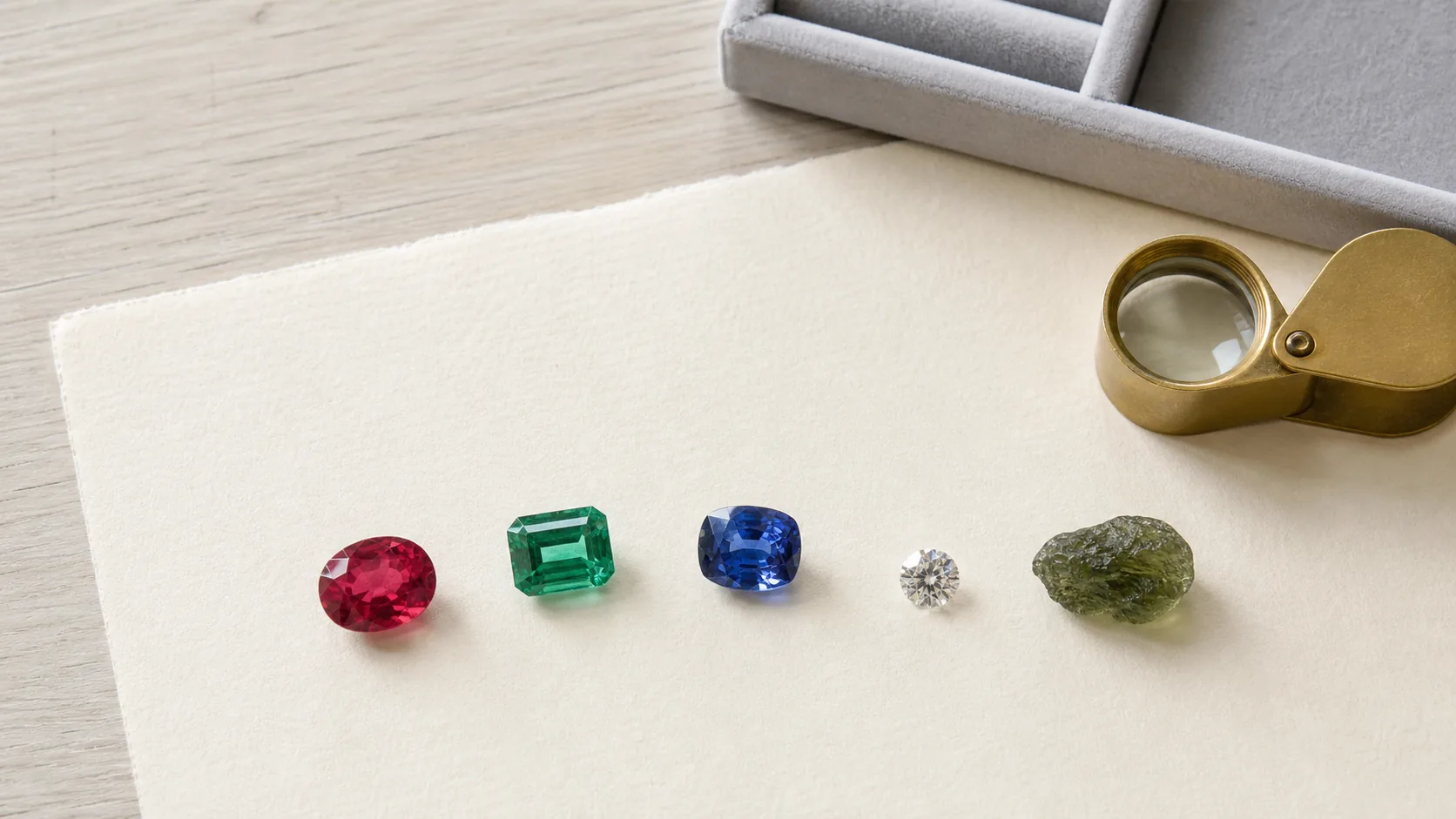
Where a diamond is graded chiefly on the quality of the stone itself, rubies, sapphires and emeralds bring in a further question: what was done to the stone after it was mined. The overwhelming majority of coloured stones on the market have been treated in some way, and that is not in itself deception — treatments are routine and legitimate in the trade, provided they are disclosed.
The problem arises when they are not. The difference between an untreated and a heavily treated ruby of the same size and colour can be severalfold, which is why this has to be established before anything else.
Common treatments and what they do to price
- Heating. The commonest process for rubies and sapphires — it deepens colour and clears the stone. It is so widespread that it is assumed, and it lowers price only slightly. A demonstrably unheated stone, by contrast, carries a marked premium.
- Oiling. Standard on emeralds. Fissures are filled with oil or resin to improve transparency. Extent is what matters: light oiling is normal, heavy oiling depresses price considerably.
- Diffusion. Colour is driven into the surface from outside at high temperature. The stone looks richly coloured, but the colour sits in a thin skin — and can vanish if the stone is recut. This reduces value fundamentally.
- Glass filling. On cheaper rubies, cavities are filled with lead glass. Such a stone is brittle, cannot survive ordinary torch work at the bench, and is worth a fraction.
- Irradiation. Used on some topaz and diamonds. The colour is usually stable, but it must be declared.
Synthetic is not the same as fake
These two terms are confused more often than any others. A synthetic stone is chemically the same mineral as a natural one — a synthetic sapphire genuinely is sapphire, it simply grew in a laboratory rather than in the earth's crust. It is not an imitation and not a fraud, as long as it is disclosed. Its market value is markedly lower, though, because it can be produced in any quantity.
An imitation is something else: glass, plastic or another mineral passed off as a rarer stone. And the difference between a synthetic sapphire, a glass imitation and a treated natural stone is invisible to the naked eye — all three can look equally good. Hence the loupe, gemmological instruments, and a laboratory report on more significant pieces.
Moldavite: the stone with the most fakes
Moldavite is a tektite formed by a meteorite impact around 15 million years ago. Besides the South Bohemian sites it also occurs in Moravia around Třebíč — so it is a stone that belongs to this region, and precisely for that reason we see a great deal of it.
Unfortunately it also attracts the most imitations. Fakes are pressed from green glass in moulds and can be spotted by several things:
- A mould seam or an over-regular shape. Genuine moldavite has an irregular, naturally etched sculpture.
- Surface. On a real stone it is rugged, with pits and grooves that cannot be imitated convincingly. Pressed glass looks smooth and „wet".
- Bubbles. Genuine moldavites contain elongated bubbles and schlieren; glass imitations tend to show round, evenly distributed bubbles.
- Colour. A deep bottle green with a brown cast is suspect; moldavite runs more olive to mossy green and is translucent when backlit.
With moldavite, locality, shape and an intact surface also count — a cut moldavite is usually worth less than a well-preserved rough piece, the opposite of most gemstones.
Which stones carry a buying value
| Stone | Main valuation factors |
|---|---|
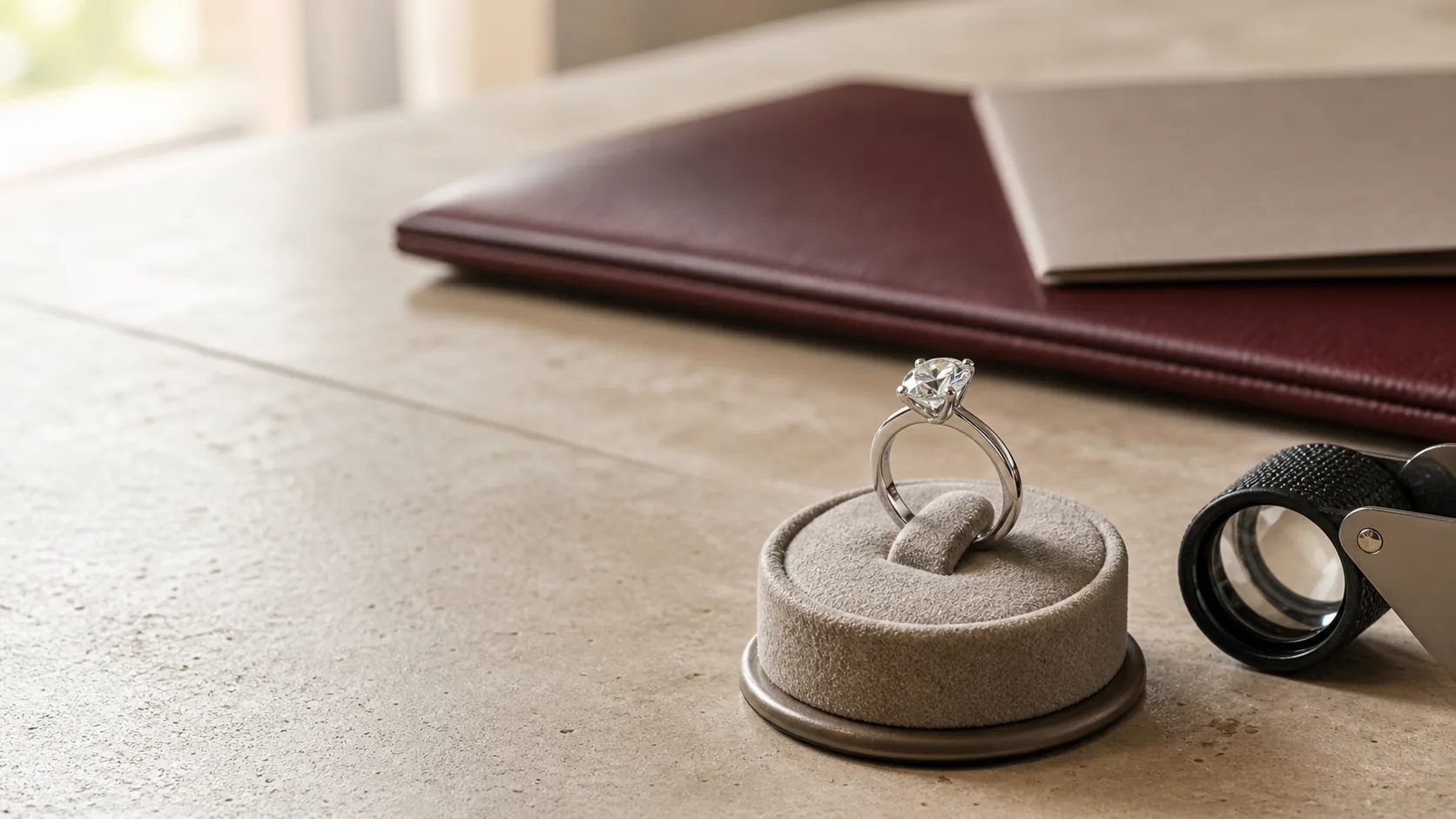
| Diamond | 4Cs, certificate, natural vs lab-grown origin |
| Ruby | colour, transparency, origin, heating and filling |
| Sapphire | hue, saturation, clarity, cut, diffusion |
| Emerald | colour, clarity, fissures and extent of oiling |
| Moldavite | authenticity, locality, shape, surface and integrity |
Other natural stones can hold value too — aquamarines, tourmalines or good garnets. What decides is not the name of the stone but the specific piece and how saleable it is.
Leave the stone in its setting
A set stone can usually be assessed without being removed. At the same time the metal, any other stones, the maker's mark and the workmanship of the whole piece are valued. Do not take the stone out at home — on older settings the prongs break easily, and a damaged stone plus a distorted seat reduces the offer by more than a separate sale would bring.
Valuation in Brno
We assess diamonds and coloured stones at Kotlářská 28, Brno-střed only when they are set in jewellery; we do not buy loose or standalone stones. For every piece we establish authenticity and any treatments first, and only then quote a non-binding offer. Details are on the diamond jewellery buying and jewellery buying pages.