Solid or plated: a question worth tenfold
We start here because it is the most common disappointment at the counter. A silver-plated item carries a layer of silver a few microns thick over a base metal — usually nickel silver, brass or nickel. That layer weighs a fraction of a gram even when the whole object weighs half a kilo. The buying value of a plated teapot therefore runs to tens of crowns, whereas a solid silver pot of the same size can mean several thousand.
This is no deception by the maker — plated goods were sold entirely legitimately and honestly, often with their own marking. It is simply that a century of family history lost track of what the thing was.
How the marks tell you
Silver marks are more forthcoming than gold ones. It pays to search with a loupe on the underside, on a cutlery handle or on the base of a vessel:
- 925, 900, 835, 800 — fineness numbers for solid silver. 925 (sterling) is the jewellery standard; 800 and 835 were routine on Central European cutlery and holloware.
- ALPACCA, NEUSILBER, NICKEL SILVER — not silver at all. It is an alloy of copper, nickel and zinc.
- EPNS, A1, 90, 100, 120 — typical markings on plated goods. The numbers state how many grams of silver were deposited per dozen pieces, not the purity.
- No mark at all on heavy holloware is a warning sign rather than a neutral one — solid silver was marked almost without exception.
Jewellery: the simplest category
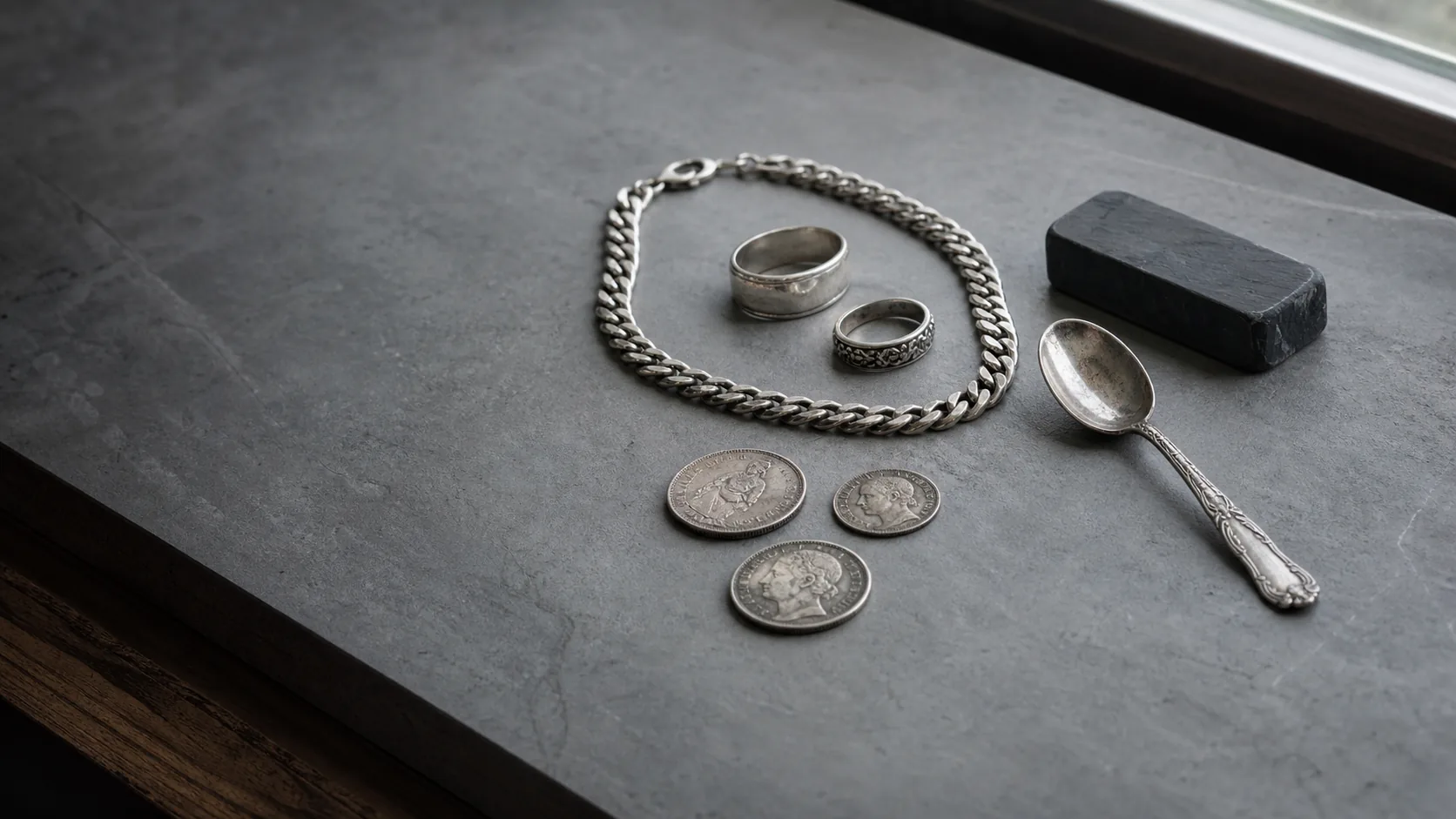
With rings, chains and bracelets the overwhelming majority sit at 925. We buy them by purity and weight, and condition is irrelevant — a tarnished, snapped or bent piece carries the same metal value as a pristine one. Tarnish is not a defect, just surface oxidation, and it is emphatically not a reason to attack silver with abrasive polish before a valuation.
Coins: worth not rushing
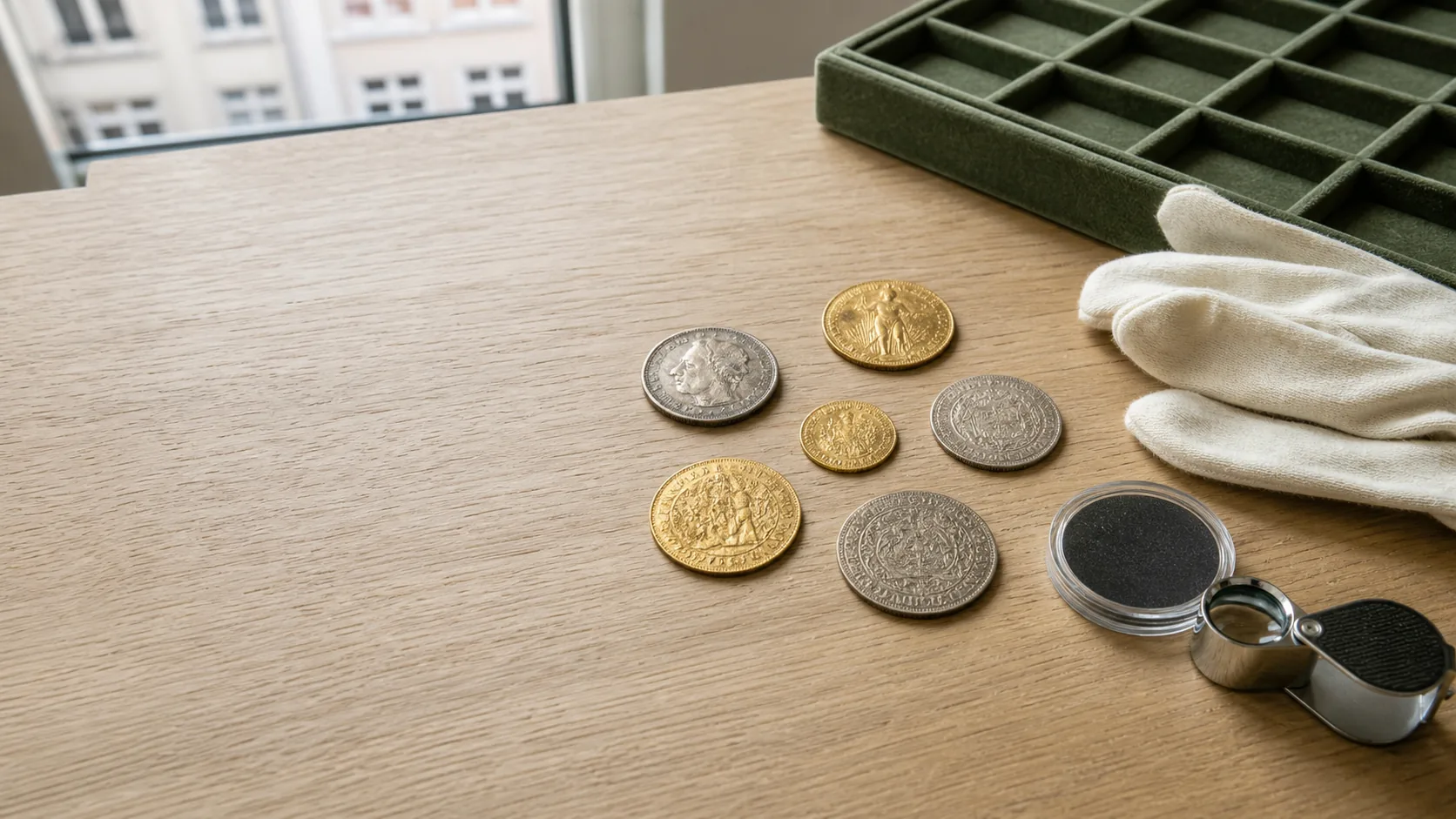
With coins, metal value is only the floor. Ordinary circulating silver coins we buy at an indicative 6–20 CZK/g, but on numismatically interesting strikes it is the year, condition and mintage that decide — and the price then has almost nothing to do with weight.
In practice that means one thing: do not clean coins and do not sort them by weight. A polished coin loses collector value because it loses its patina, and that loss usually exceeds the value of the silver in it.
Cutlery and holloware: where people are caught out
This is where most of the disappointment lands. Family canteens „from grandmother" are, as a rule, plated nickel silver, because solid silver cutlery was a luxury even then. You can tell from the mark on the handle and from a yellowish or grey metal showing through the silver at edges and spoon tips.
If it genuinely is solid silver (marked 800 or 835), one further point applies to complete marked canteens: the set is usually worth more than the sum of its parts, particularly with its original case. So do not break it up before the valuation.
What you get for silver
The indicative range is 6–50 CZK/g, and it is that wide precisely because it spans different purities and collector premiums. Current values per category are in the buying price list. The mechanism turning a market price into an offer is the same for silver as for gold and is described in How the gold buying price is calculated.
What to bring
Bring things as they are — uncleaned, undismantled, sets kept together. Bring along the pieces you are certain are „only plated" too; we assess them free of charge, and occasionally the opposite turns out to be true. We measure the purity, weigh the piece and quote on the spot.
You will find us at Kotlářská 28, Brno-střed. Details of the service are on the silver buying Brno page, and what to watch for when choosing a buyer is covered in Silver buying in Brno: what to watch out for.