White gold is not white
This is the key to everything else. Gold is yellow by nature and no alloying metal decolourises it completely. The alloys we call white gold are in reality tinged grey, yellowish or faintly brown. The white appearance comes from a surface finish — a layer of rhodium, a platinum-group metal that is brilliantly white and very hard.
So when a white ring begins to show yellow after years of wear, nothing mysterious has happened: the rhodium has worn away and the alloy beneath is showing. The gold was there all along and there is exactly as much of it as before.
Two different white golds
One name covers two distinct recipes, and it is worth knowing which you have:
- With palladium. The more expensive version. The alloy is naturally paler, greyish, and looks respectable even unplated. Palladium is itself a costly platinum-group metal.
- With nickel. Cheaper and harder. Unplated it has a noticeably warmer, yellowish tone, so it is always rhodium-plated. Nickel, however, is a common allergen — if your finger itches under the ring, or a rash appears just as the plating wears through, that is the classic sequence.
In the EU, nickel release from items in prolonged skin contact is regulated, so newer jewellery is safer in this respect than pieces from the 1990s.
Why the price matches yellow gold
The buying price is calculated purely from the proportion of pure gold in the alloy. White gold 585 contains the same 58.5% gold as yellow gold 585 — only the remaining 41.5% is mixed differently. The price per gram is therefore practically identical.
There is one case where this is not exact: white gold with a high palladium content has some value in the alloy itself. The difference is small, though, and does not override the decisive factor, which remains purity. Current ranges are in the buying price list, and the calculation is set out in Gold buying in Brno: price per gram.
Rhodium plating adds no value
The rhodium layer is on the order of tenths of a micron thick. Its weight against the piece is negligible, so it contributes essentially nothing to the buying price — even though rhodium as a metal costs more than gold.
From which follows a practical point that saves people money: do not have a piece re-plated before selling it. Refinishing at a goldsmith's typically costs several hundred crowns and will not show up in the offer. A ring heading for sale can perfectly well be yellowing.
When plating is worth it
The picture changes if you intend to keep wearing the piece — or to sell it as jewellery rather than as metal. On a well-preserved signed piece heading to a new wearer, appearance counts. Re-plating is routine servicing and, on a ring worn daily, comes round roughly every two to three years.
How we verify purity
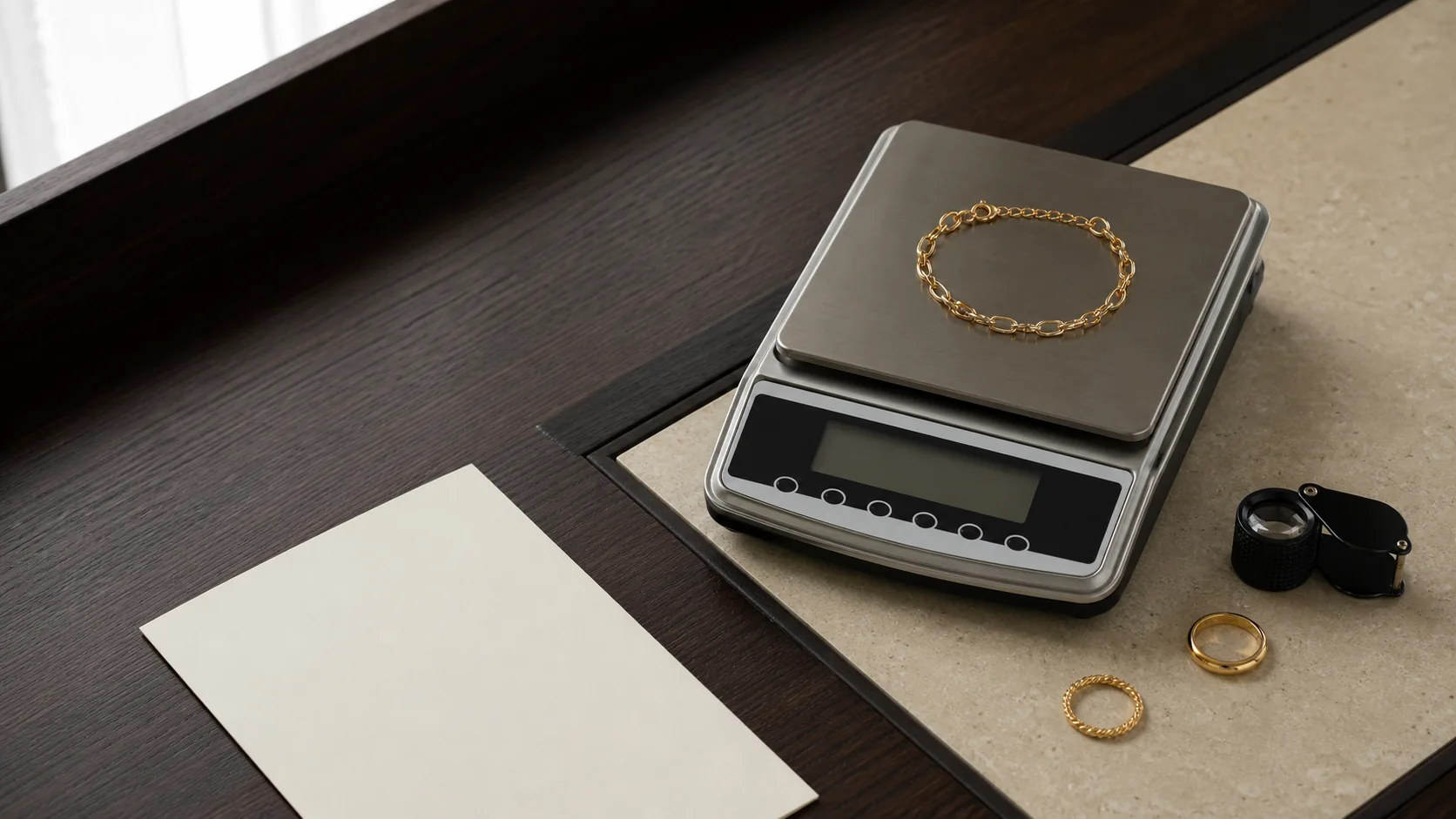
We determine the purity of white gold with a non-contact tester and from the assay marks, and weigh the piece on a calibrated scale. One note on measurement: the tester reads the surface, so on plated pieces we measure where the layer has worn through, or correct the reading — otherwise the instrument would report rhodium rather than the alloy.
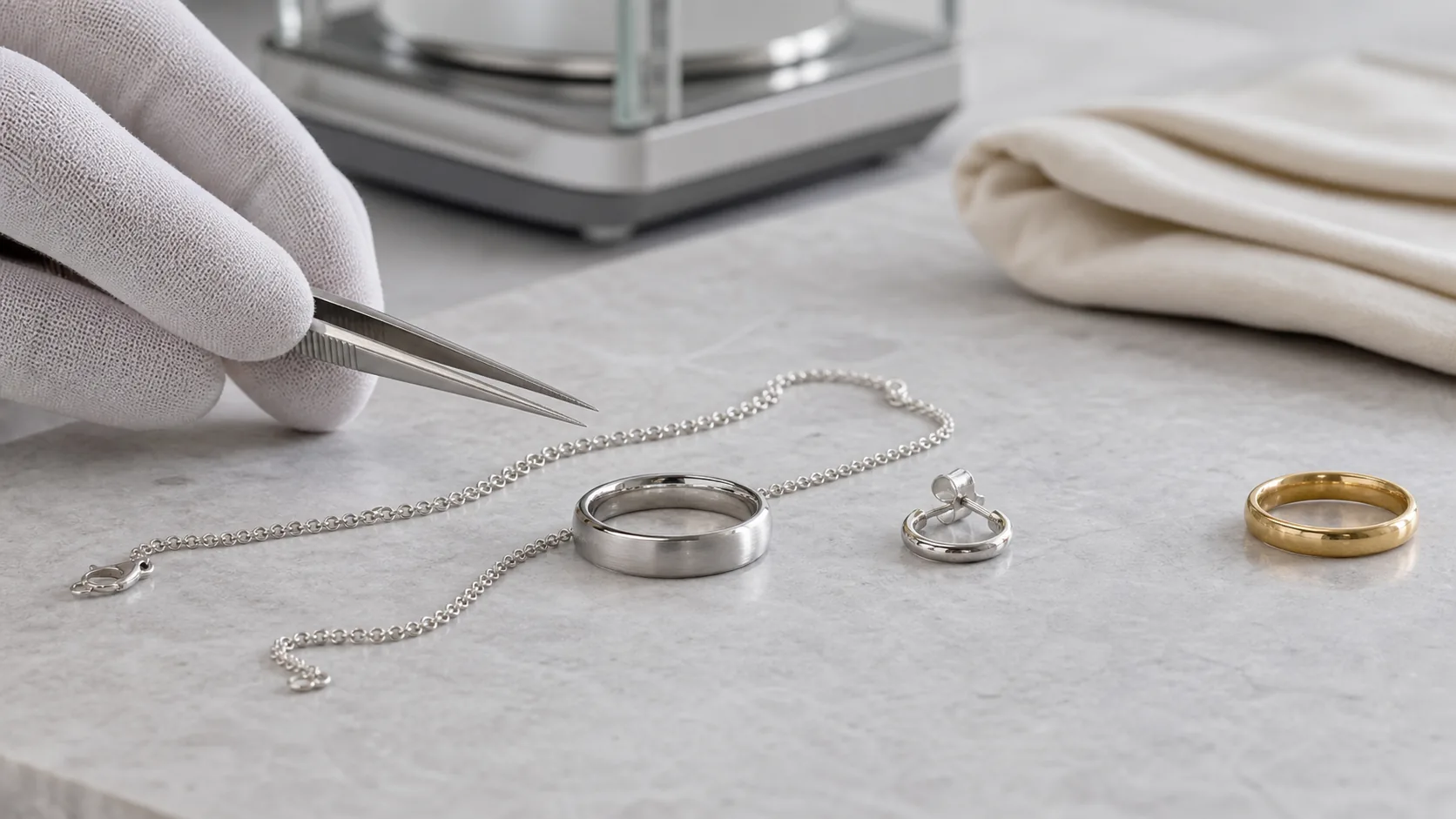
Watch out for confusion too: white gold, platinum and palladium look alike. Platinum is marked 950 or Pt and is noticeably heavier; palladium carries a Pd mark. The price difference is substantial, so on faintly marked pieces it pays to have the metal identified.
Valuation in Brno
Bring your jewellery to Kotlářská 28, Brno-střed — we check purity and weight free of charge. On pieces with stones we value the metal and any set diamonds separately; details on the jewellery buying page.